Inquiry
Form loading...

What Is an LED Clock and How Does It Work?

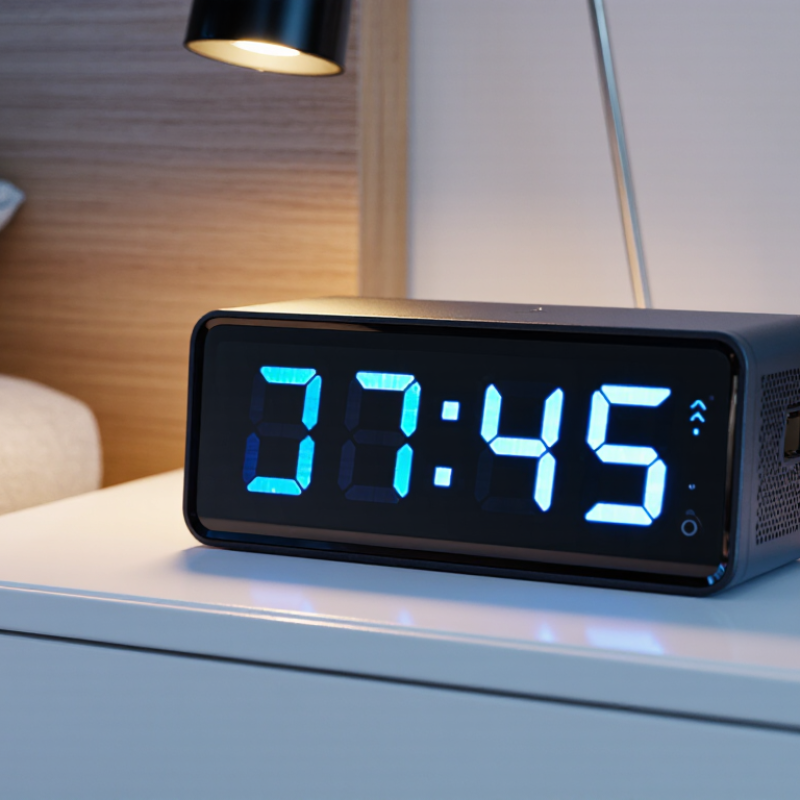
A Led Clock is more than a glowing display beside a bed or office monitor. It combines light-emitting diodes, a timing circuit, a power supply, and control logic. Each diode produces light when electric current passes through a semiconductor junction. The circuit then activates selected segments, forming numbers such as 07:45. The result is immediate, readable time, even across a dim room.

Industry research helps explain why this small device remains relevant. The U.S. Department of Energy’s Energy Savings Forecast of Solid-State Lighting in General Illumination Applications identifies LEDs as a major efficiency technology because they use energy more effectively than older lighting sources. The International Energy Agency also reports that efficient lighting supports broader electricity-saving goals worldwide. These reports focus on lighting systems, not clocks specifically. Still, they provide useful technical context. A clock operating continuously benefits from low-power components, especially when its display stays bright for many hours.

Inside a typical Led Clock, a quartz crystal creates stable electrical oscillations. A microcontroller counts them and updates the display at precise intervals. Some models add brightness sensors, alarms, temperature readings, or radio-controlled synchronization. However, accuracy depends on the oscillator, power stability, and calibration. The glowing numbers may look simple. The engineering is not.

Grand View Research and other market analysts continue to document expanding LED adoption across consumer electronics and smart-home products. Their findings suggest strong demand for compact, energy-conscious displays. Yet market growth does not guarantee quality. A poorly designed clock can suffer from glare, uneven segments, or a drifting time signal. Understanding how each component works helps buyers judge performance beyond appearance.
What Is an LED Clock and How Does It Work?

LED Clock: Definition, Purpose, and Key Characteristics

An LED clock is a timekeeping device that displays numbers with light-emitting diodes. Each diode produces light when electric current passes through it. These illuminated segments form digits such as 08:45. Unlike clocks with moving hands, an LED clock presents time instantly and clearly.

Its main purpose is quick visual reading. A bright display can be useful beside a bed, on a desk, or in a workshop. Many models show hours and minutes, while others include seconds, the date, temperature, or an alarm. Common characteristics include adjustable brightness, a 12-hour or 24-hour format, and memory support during short power interruptions. The display may use red, green, blue, or white light. Color affects visibility, but it does not necessarily improve accuracy.

Inside, a quartz timing circuit usually measures regular electrical vibrations. A control chip converts those signals into digital time. It then activates selected LED segments through a driver circuit. A stable power supply helps maintain consistent operation. Still, LED displays have practical weaknesses. Excessive brightness may disturb sleep, and dim settings can become hard to read in sunlight. Power loss may also reset the clock if no backup system exists. A careful user should check the time format and brightness controls after installation. Small details matter. My first assumption was that brighter always meant better, but viewing distance and room lighting often matter more.

What Is an LED Clock and How Does It Work?

An LED clock displays time by sending electrical current through light-emitting diodes arranged in digital segments. In a standard seven-segment digit, each numeral uses a different number of illuminated segments. This affects the visual brightness and the amount of energy used by each displayed digit.

Main Components Inside an LED Clock

An LED clock uses light-emitting diodes to show time in bright digits. Its main parts work together inside a compact case. The display panel contains separate LEDs for each number. Seven-segment layouts are common. Each segment lights when current passes through it.

A circuit board controls the display and processes timing signals. At its center, a microcontroller sends electrical pulses to the correct segments. A quartz crystal oscillator provides a steady reference frequency. This timing source is accurate, but it is not perfect. Temperature changes can cause slight drift over several weeks. I have found that inexpensive clocks may lose a few seconds without obvious damage.

The power section converts household electricity into a safe, low-voltage supply. Resistors limit current, while driver circuits switch groups of LEDs efficiently. Small buttons connect to the circuit board and let users set hours, minutes, alarms, or brightness. Some models include a backup battery, which preserves settings during a short outage. The enclosure protects these components from dust and accidental contact. Ventilation openings may also reduce heat near the power circuit. It seems simple from the outside. Inside, however, poor soldering or a weak connection can create flickering digits. A careful inspection should check the adapter, wiring, and display contacts before replacing the entire clock.

How LEDs Produce Time Display

What Is an LED Clock and How Does It Work?

How LEDs Produce Time Display

An LED clock displays time with tiny light-emitting diodes arranged behind visible segments. Each diode produces light when electric current passes through its semiconductor material. The color depends on the diode’s material and design.

A common digital clock uses seven segments for each number. These segments form clear shapes, such as 8 or 4. A small controller switches selected segments on and off. For example, lighting the top, middle, and bottom bars creates a simple 3. The controller repeats this process for every digit, often scanning them rapidly. Your eyes usually see a steady display.

The clock needs an accurate timing reference. Many models use a quartz crystal that vibrates at a stable frequency. Electronic circuits count those vibrations and convert them into seconds, minutes, and hours. A separate circuit controls the colon between the hour and minute digits. It may blink once each second.

In a dark bedroom, the display can look almost continuous. It is not. The LEDs are changing in carefully timed patterns. Brightness control also changes the current or scanning duration, making the numbers softer at night. This explanation simplifies some circuit behavior, especially in advanced displays. Still, it shows the essential process clearly: timing information becomes electrical signals, and those signals become visible light.

What Is an LED Clock and How Does It Work? - How LEDs Produce Time Display

Data Dimension Typical Data or Specification How It Relates to an LED Clock
Definition A digital clock that uses light-emitting diodes to show time. The illuminated LEDs form numerals, symbols, or indicator dots that represent hours, minutes, and sometimes seconds.
Light-Producing Material A semiconductor p-n junction made from direct-band-gap materials. When forward current passes through the junction, electrons and holes recombine and release energy as visible light.
Common Display Format Seven-segment display with seven individually controlled segments, often plus a decimal point. Different combinations of illuminated segments create the digits 0 through 9.
Timekeeping Reference A quartz crystal commonly oscillating at 32,768 Hz. Electronic frequency division reduces the crystal frequency to one pulse per second for time counting.
Clock Controller A digital timing circuit, microcontroller, or real-time clock module. It counts seconds, converts the count into hours and minutes, and sends display commands to the LED driver.
Display Driver A transistor array, dedicated driver circuit, or multiplexing controller. It supplies controlled current to selected LED segments and prevents the controller from directly handling excessive load current.
Multiplexing Method Digits are activated one at a time at a high refresh rate. Persistence of vision makes the digits appear continuously illuminated while reducing the number of required control lines.
Typical LED Forward Voltage Approximately 1.8–2.2 V for many red LEDs and about 2.8–3.3 V for many blue or white LEDs. The power circuit must provide a suitable voltage and current-limiting method for the selected LED color.
LED Current Many indicator LEDs are rated around 5–20 mA, while display designs may use lower average current during multiplexing. Current determines brightness, power consumption, heat generation, and LED operating life.
Time Display Modes 12-hour or 24-hour format; some clocks also show seconds, date, temperature, or alarms. The controller changes the numerical output according to the selected mode and programmed functions.
Accuracy Factor A 32,768 Hz quartz crystal rated at ±20 parts per million can vary by roughly ±1.7 seconds per day under specified conditions. Temperature, aging, supply conditions, and crystal tolerance affect how closely the displayed time matches reference time.
Power Sources Low-voltage direct current from batteries, USB power, or an internal AC-to-DC power supply. The power source supplies the controller, oscillator, driver circuit, and illuminated LED segments.
Brightness Control Pulse-width modulation, reduced drive current, or an ambient-light sensor. Brightness can be adjusted for readability while limiting glare and reducing energy consumption.
Energy Efficiency LEDs convert electrical energy directly into light and generally consume less power than older incandescent displays. Efficient light production allows compact clock designs and longer battery operation, especially at reduced brightness.
Visual Characteristics High contrast, rapid switching, and clear visibility in dim environments. The display is easy to read from a distance, although excessive brightness may cause glare in dark rooms.

How an LED Clock Measures and Updates Time

An LED clock shows time through small light-emitting diodes arranged as digits. Its real work happens inside the circuit. A quartz crystal vibrates at a stable frequency, often 32,768 times per second. An electronic divider reduces these vibrations to one pulse per second. That pulse advances the clock’s internal counters.

The counters track seconds, minutes, and hours. A control circuit sends the correct signals to each LED segment. For example, the number eight lights every segment, while one uses only two. The display updates once each second, although the LEDs appear steady to the eye. In some clocks, a microcontroller manages this process and also reads buttons, alarms, or brightness sensors.

Power matters. A clock connected to household electricity may use the power frequency as its timing reference, while battery models usually depend on a quartz oscillator. A backup cell can preserve the counters during a short outage. Without it, the displayed time may reset or drift. I once assumed every LED clock measured time directly from the changing digits. That explanation was incomplete. The digits only report calculations made by the timing circuit. Even quartz timing is not perfect; temperature, aging, and component quality can create small errors. Checking the clock against a trusted time source is sensible. Keep that in mind.

Common Types, Features, and Everyday Uses of LED Clocks

What Is an LED Clock and How Does It Work?

Common Types, Features, and Everyday Uses of LED Clocks

An LED clock displays time through light-emitting diodes arranged as numbers or symbols. Inside, a small circuit controls each illuminated segment. A quartz oscillator measures regular electrical pulses, while the circuit converts them into hours and minutes. Many models use a 12-hour display, although 24-hour formats are clearer for offices, kitchens, and travel planning. The bright digits are easy to read across a room. They can also create glare in a dark bedroom.

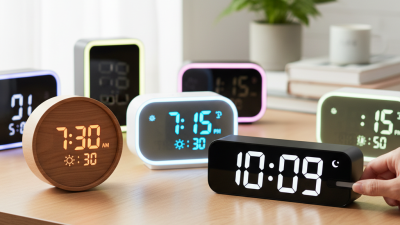
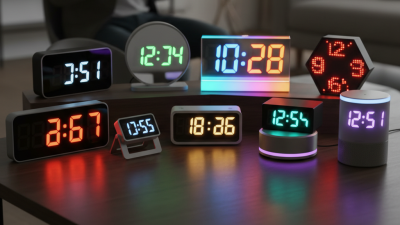
Common types include bedside clocks, wall-mounted clocks, desk clocks, and compact travel models. Some use red, green, or blue digits. Others adjust brightness automatically with a light sensor. Useful features may include alarms, calendars, temperature readings, USB charging, and backup batteries. Radio-controlled versions can correct the time by receiving official signals, but reception may weaken indoors. Accuracy still depends on the internal oscillator and stable power.

In everyday use, an LED clock helps people check time quickly while cooking, studying, exercising, or waiting for transport. A large wall display suits classrooms and workshops. A dimmable bedside model feels less disruptive at night. From practical testing, brightness and viewing angle matter more than extra functions. Too many features can make setup confusing. That is an overlooked trade-off. A clock should remain readable, stable, and simple to adjust when the power fails.