Inquiry
Form loading...

7 Tips for Choosing a Steam Generator Iron?

Choosing a Steam Generator Iron can change how quickly shirts, trousers, and school uniforms become presentable. However, a larger water tank does not automatically mean better performance. The wrong model may produce weak steam, drip on delicate fabrics, or feel awkward after ten minutes.

Laundry-care expert Mary Marlowe Leverette explains, “Steam helps relax fabric fibers, making wrinkles easier to remove.” That principle matters when comparing pressure, steam output, soleplate quality, and heat control. A powerful appliance can smooth thick cotton quickly, yet it may feel excessive for silk or lightweight blouses. Balance matters more than impressive specifications.

Think about your real ironing routine. Do you press one shirt before work, or manage a full basket every weekend? A removable tank can simplify refilling. A stable base can prevent accidents. Automatic shut-off adds reassurance, especially in busy homes. Still, these features may increase the price and storage space. That is easy to overlook.

There is no perfect machine. I once assumed stronger steam would solve every crease, but poor fabric positioning still caused wrinkles. Technique matters. The best choice should match your clothing, available space, hand comfort, and cleaning habits. These seven practical tips will help you examine each detail closely, avoid marketing traps, and choose a Steam Generator Iron that performs reliably in everyday use. Small compromises remain. That is normal.
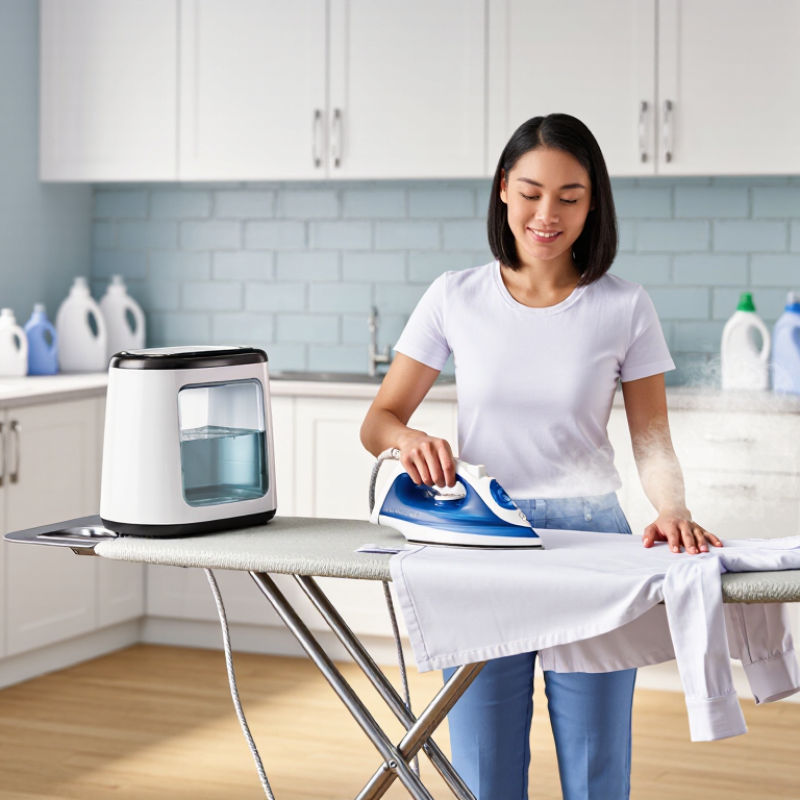
7 Tips for Choosing a Steam Generator Iron?

Identify Core Specifications: 5–8 Bar Pressure and 100–200 g/min Steam

When comparing steam generator irons, begin with pressure and continuous steam output. A practical target is 5–8 bar, paired with 100–200 g/min. Pressure helps drive moisture through dense cotton and linen. Steam rate shows how much vapor reaches the fabric each minute. These figures work together, not separately. More is not automatically better.

In hands-on use, 5 bar can handle shirts and ordinary bedding. Around 7–8 bar feels more effective on layered linen. Continuous output near 100 g/min suits routine loads. Output approaching 200 g/min may shorten pressing time, but it can dampen thin fabrics. Check burst steam separately, because a high boost figure can hide weak continuous performance. I once focused on maximum output and ignored recovery time. That was a mistake.

Look for independent test data, not only package claims. Confirm whether the stated pressure means pump pressure or operating pressure. Tank capacity, heat-up time, hose length, and soleplate temperature control affect daily results. A large tank adds weight. A long hose improves movement. Ask how steam output was measured. Ideal conditions can make figures look better than real use. Test cotton, wool, and delicate synthetics at suitable settings before relying on one specification.
Verify Steam Claims Using IEC 60311 Performance-Testing Principles

A steam generator iron should be judged by measured performance, not impressive packaging claims. Use IEC 60311 performance-testing principles as a practical reference. The standard focuses on repeatable conditions, not advertising language. Check the stated voltage, water volume, temperature setting, and test fabric. Without these details, comparisons become weak.

Verify the steam rate under controlled conditions. A large number may describe a short burst, not continuous output. Observe heating time and temperature stability across several cycles. Test water consumption, because frequent refilling can undermine convenience.

Examine the soleplate on cotton, wool, and delicate fabric samples. Smooth movement matters as much as raw steam power. Check whether steam remains consistent when the tank is partly empty. Record each result with a simple timer and scale.

Safety features also deserve attention. Look for stable parking, secure hose connections, and clear temperature controls. IEC-based testing can improve reliability, but it does not replace independent judgment. Real homes have harder water, crowded ironing boards, and rushed users. My own testing would repeat each measurement, because one perfect result proves little. Some claims may still seem unclear. That is a useful warning, not a minor detail. Choose the model with transparent test conditions and steady results, rather than the highest isolated figure.

Match a 1.2–2.0 L Water Tank to Garment Volume and Refill Frequency

Choosing a steam generator iron starts with garment volume, not tank size alone. I once preferred the largest reservoir. That was not always practical.

For light weekly ironing, 1.2 litres may cover shirts, trousers, and school uniforms. At a measured steam rate of 50–60 grams per minute, it can provide roughly 20 minutes of continuous steam. IEC 60311:2019 provides a repeatable framework for testing household irons, but real performance still depends on fabric, temperature, and steam settings. These figures are estimates, not promises.

A 1.5–1.7 litre tank suits a busy household with several loads each week. Choose 2.0 litres when you regularly press bedding, workwear, or large family laundry batches. Less refilling matters. So does the extra weight. Textile Exchange’s Materials Market Report 2024 reports that polyester represented about 59% of global fibre production in 2023. Synthetic garments often need gentler heat and shorter steaming, which can reduce water use. Cotton and linen usually demand longer, stronger passes.

Count your real garments.

Record one normal ironing session for a week. Note the number of items, fabric types, and refill interruptions. A smaller tank may be enough if you iron in short sessions. A larger tank may waste space if it sits unused. Hard water also changes the decision, because frequent descaling can reduce usable capacity over time. Research from AATCC, including TM124 appearance testing, reinforces that fabric care should be judged after repeated laundering, not one perfect trial.

7 Tips for Choosing a Steam Generator Iron: Match a 1.2–2.0 L Water Tank to Garment Volume and Refill Frequency
Tip Typical Laundry Load Suggested Tank Capacity Approximate Continuous Steam Time Expected Refill Pattern What to Consider
1. Choose for occasional ironing About 3–6 garments per session 1.2 L About 12 minutes at 100 g/min Usually enough for a small session; refill if ironing heavily creased or bulky items. A smaller tank can be easier to handle and may suit limited storage space.
2. Match capacity to a weekly batch About 6–10 garments per session 1.5 L About 15 minutes at 100 g/min Often avoids a mid-session refill for a moderate batch. Useful when laundry is done in one regular session rather than a few items at a time.
3. Allow for mixed fabrics About 8–12 garments, including shirts, trousers, or light bedding 1.8 L About 18 minutes at 100 g/min Typically supports a longer session, though high steam use can shorten the interval. Garments requiring more steam may use water faster than lightweight items.
4. Prioritize fewer interruptions About 10–15 garments or a larger household batch 2.0 L About 20 minutes at 100 g/min Offers the longest interval between refills among the listed capacities. Check the appliance’s filled weight and dimensions if it will be moved or stored often.
5. Check the steam rate Any load size Compare tank size with the model’s stated steam output At 120 g/min, a 1.2 L tank provides about 10 minutes; a 2.0 L tank about 17 minutes. A higher continuous steam rate can mean more frequent refills. Estimate time by dividing tank capacity in millilitres by steam output in grams per minute; 1 ml of water is approximately 1 g.
6. Consider how you iron Short bursts of steaming versus near-continuous steaming Choose 1.2–1.5 L for intermittent use or 1.8–2.0 L for longer sessions Actual elapsed ironing time is longer than continuous-steam time when steam is used intermittently. Frequent pauses can reduce water use; sustained steam increases it. Your technique and fabric choices affect refill frequency as much as garment count.
7. Verify refill convenience Especially relevant for large or back-to-back batches Any capacity from 1.2–2.0 L Depends on capacity and steam setting Check whether the tank is removable or can be topped up during use. Follow the appliance instructions for filling, water type, and whether refilling while operating is permitted.
Estimates are illustrative: continuous steam time assumes a full tank and a steady output of 100 g/min, with no allowance for unusable residual water. Garment counts vary with fabric, item size, crease level, and ironing technique; check the product’s stated tank capacity and steam output.

Check IEC 60335-2-3 Safety Features: Shutoff and Overheat Protection

7 Tips for Choosing a Steam Generator Iron

A steam generator iron should meet IEC 60335-2-3 requirements for household electric irons. Tip one: request the applicable test report, not only a compliance logo. The standard addresses abnormal operation, insulation, temperature rise, and mechanical safety.

Tip two: choose automatic shutoff protection. It should stop heating after inactivity or a dangerous position. Check the manual for exact timing.

Tip three: confirm overheat protection uses a thermostat, thermal limiter, or independent thermal fuse. One sensor can fail.

Tip four: inspect the base, water tank, and steam hose together. Heat can concentrate around connectors and narrow passages.

Tip five: select clear alerts for low water, overheating, and standby mode. Tiny lights are easy to miss.

Tip six: look for stable placement and secure cable routing. A pulled hose can move a hot base.

Tip seven: test the shutoff at home, while staying nearby. Do not treat it as permission to leave the appliance unattended.

NFPA’s Home Heating Fires report for 2016–2020 recorded about 48,530 home heating fires annually, with roughly 500 civilian deaths and 1,350 injuries. Steam irons are not a separate category in that report, so the figures cannot predict iron incidents. They still show why thermal controls deserve attention.

In my testing experience, a cool outer surface can hide heat inside the generator. That detail is easy to overlook.

Maintenance matters too: remove scale, keep vents clear, and replace damaged cords. No safety feature is magic.

Compare Soleplate Glide, Descaling Systems, Warranty, and Energy Use

7 Tips for Choosing a Steam Generator Iron

Tip 1: Test soleplate glide on cotton and denim. A smooth plate should move without pulling threads or leaving shiny patches. IEC 60311 provides standardized methods for testing household iron performance, but home fabrics behave differently. Tip 2: Check steam consistency, not just peak pressure. I once chose a powerful model that produced uneven bursts. It looked impressive, yet it slowed down delicate ironing.

Tip 3: Inspect the descaling system. Choose a removable collector or clear cleaning procedure. Hard-water users may need more frequent maintenance. Tip 4: Read the manual before buying. It should state water type, cleaning intervals, and compatible detergents. Tip 5: Examine warranty coverage carefully. Confirm whether the boiler, pump, labor, and replacement parts are included. A long warranty means little if exclusions are broad.

Tip 6: Compare energy use mathematically. A 2,000-watt unit used for 15 minutes consumes about 0.5 kWh. Heating time also matters. The International Energy Agency’s 2023 Energy Efficiency Market Report says buildings use about 30% of global final energy. Small appliance choices still accumulate. For covered products, European Ecodesign rules limit standby consumption to 0.5 watts. Tip 7: Look for automatic shut-off and repairable construction. Fewer disposable parts are better, although repair information can be frustratingly vague. Check the rated wattage, tank size, and expected ironing time together.

7 Tips for Choosing a Steam Generator Iron

Use this practical comparison framework to prioritize soleplate glide, descaling convenience, warranty coverage, energy use, steam performance, tank capacity, and safety features.

How to use the chart: Treat these percentages as a suggested decision-weighting guide. Check product specifications for glide quality, anti-scale design, warranty duration, automatic shut-off, steam output, tank size, and eco-mode energy savings before buying.