Inquiry
Form loading...
Choosing the best Push Sweeper from China starts with the surface you need to clean, not the product photo. A compact model may suit a workshop aisle, while a wider machine can cover more ground in a warehouse or parking area. But width alone does not tell you how well it handles dust, leaves, or small debris. The brush design, hopper capacity, wheel quality, and handle comfort matter too. Small details matter.
Think about daily use. Will the sweeper move over smooth concrete, rough paving, or uneven outdoor paths? Check whether the brush height can be adjusted and whether the hopper is easy to remove and empty. A large hopper saves trips, but it can make a full machine harder to push. That trade-off is easy to miss in a catalog. I would not treat a polished product page as proof of performance; clear specifications and a sample inspection can tell you more.
When comparing Chinese suppliers, ask for product dimensions, materials, replacement-brush options, packaging details, and recent operating videos. Confirm that the quoted model matches the one shown, and clarify minimum order quantities, lead times, and after-sales support in writing. If possible, test a sample on the surface and debris you actually encounter. A supplier’s response to specific questions can be useful, but it is not a guarantee of long-term quality. No single Push Sweeper is best for every buyer. The right choice balances cleaning needs, durability, ease of maintenance, and total purchasing cost.
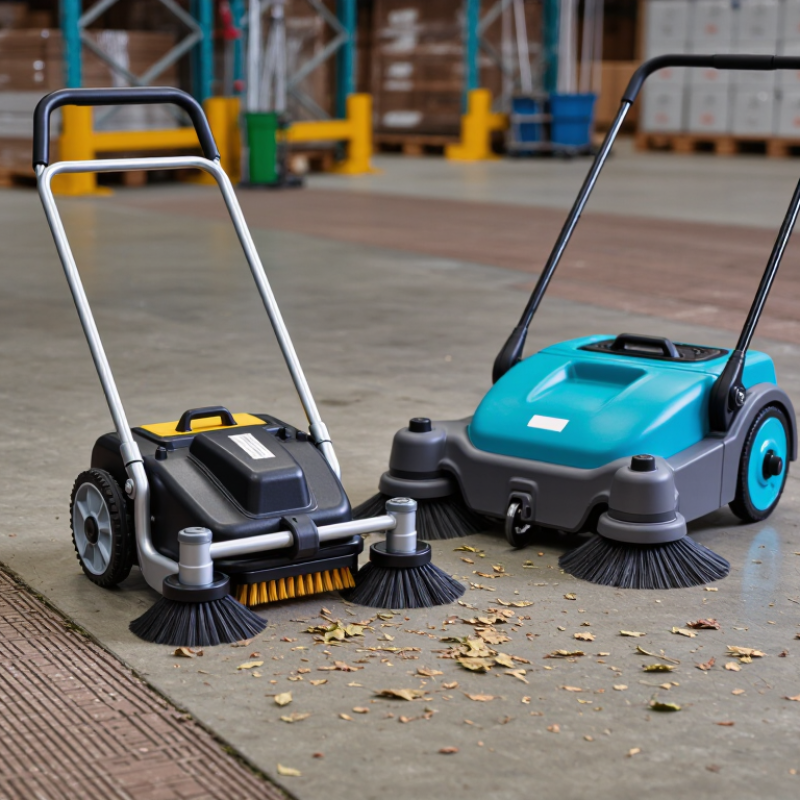
Before comparing push sweepers from China, describe the debris your site produces. Start with the mess. Dry leaves, paper scraps, and larger litter are easier to collect than fine dust or small gravel. Note whether debris is light, heavy, damp, or mixed. Fine particles may pass through a basic brush setup, while heavier pieces can fill a small hopper quickly.
Then inspect the ground. Smooth concrete allows different brush contact than pavers, asphalt, or textured flooring. Check for cracks, joints, slopes, and tight corners where debris tends to gather. A clean showroom floor can mislead. Test a sample sweeper on the actual surface, and observe whether it leaves dust behind or struggles with uneven patches. The result may surprise you.
Once debris and surfaces are clear, compare manual and powered-assist models, brush width, hopper capacity, and adjustment options. A wider brush can cover open areas faster, but may be awkward between parked equipment. Ask suppliers for measured specifications, replacement-part details, and a practical demonstration. Test it outdoors. I would not choose by sweeping width alone; capacity, maneuverability, and brush suitability matter just as much for daily use.
Start with the material to be collected and the surface where it will be used. The recommendations below describe common manual push-sweeper configurations; actual performance depends on brush design, adjustment, hopper capacity, and operating conditions.
| Debris and Surface Profile | Typical Examples | Push Sweeper Configuration to Consider | Why It May Fit | Points to Check Before Comparing Models |
|---|---|---|---|---|
| Large, lightweight debris on broad, hard outdoor areas | Dry leaves, paper, and larger packaging scraps on paved yards or parking areas | Wide cleaning path with one or two side brushes and a large collection hopper | Side brushes guide material toward the collection path; a larger hopper can reduce emptying frequency during cleanup of bulky debris. | Check that the hopper opening accommodates the debris, and consider maneuverability around parked vehicles, corners, and narrow routes. |
| Coarse, heavier particles on relatively smooth hard floors | Grit, small stones, and workshop or warehouse debris on concrete or asphalt | Mechanical push sweeper with a main collection brush and side brush or brushes | The rotating brushes move loose particles into the hopper without requiring powered propulsion. | Look for a brush-height adjustment suitable for the floor and debris. Very heavy or embedded material may need a different cleaning method. |
| Fine, dry dust on smooth indoor floors | Light dust and fine dry particles on sealed concrete, tile, or similar hard flooring | A model with effective dust containment; consider enclosed brush areas or a filtration feature if available | Fine particles can become airborne during sweeping, so containment and filtration may matter more than brush width alone. | Confirm the filtration and dust-control details for the specific model. A basic mechanical sweeper may not capture all fine dust; follow site requirements for dust exposure. |
| Debris on uneven or lightly textured outdoor surfaces | Dry leaves, coarse dirt, or small debris on rough concrete, pavers, or asphalt | A robust mechanical sweeper with adjustable brushes and wheels suited to the surface | Brush contact and wheel movement affect collection on uneven surfaces; adjustment can help maintain contact across modest changes in texture. | Ask for a demonstration on the actual surface. Deep joints, loose gravel, and large changes in level can reduce collection consistency. |
| Debris in narrow aisles or confined areas | Dust, grit, and small scraps in corridors, storerooms, or between shelving | Compact push sweeper with a narrower cleaning path and a turning-friendly layout | A smaller footprint is easier to guide around obstacles and through restricted passages. | Compare overall width, handle clearance, turning space, and hopper access—not just the stated sweeping width. |
| Mixed debris on a combination of indoor and outdoor hard floors | Dust and grit indoors; leaves and larger scraps outdoors | General-purpose mechanical sweeper with replaceable or adjustable brushes, if supported | A versatile brush arrangement can cover routine cleaning across more than one hard-surface area. | Check whether brush materials and settings suit both surfaces. A configuration optimized for coarse outdoor debris may be less effective with fine indoor dust. |
| Wet, sticky, or oily material | Wet leaves, mud, spills, or greasy residue | Usually not a standard dry mechanical push sweeper; select equipment intended for the material and cleanup procedure | Wet or sticky material can adhere to brushes and interfere with collection; a dry sweeper is generally intended for loose debris. | Check the manufacturer’s instructions and the site’s spill-control requirements. Do not assume a dry push sweeper is suitable for liquids or hazardous substances. |
Comparison tip: Once the debris and surface are defined, compare cleaning width, hopper capacity, brush adjustment and replacement, dust-control features, maneuverability, and maintenance access. Verify specifications and test the sweeper under representative site conditions.