China Top Push Sweeper Manufacturers for Global Buyers?
Global buyers are reassessing floor-cleaning equipment as labor costs, hygiene expectations, and sustainability targets continue to rise. MarketsandMarkets’ Industrial Cleaning Equipment Market report identifies automation, battery power, and lower operating costs as major industry trends. Those trends directly influence modern Push Sweeper purchasing decisions.
China has become an important manufacturing base for manual and ride-on cleaning equipment. Export-focused factories now offer compact push models, side brushes, adjustable handles, dust-control systems, and durable steel or high-impact plastic frames. According to China Customs trade data, China remains a major exporter of machinery and mechanical appliances across global markets, although customs categories do not isolate every Push Sweeper model. Buyers should recognize that limitation.
Quality varies significantly between suppliers. A polished product photograph proves little. Experienced importers inspect brush wear, wheel alignment, hopper capacity, packaging strength, and replacement-part availability. A workshop test can reveal more than a long brochure. Request factory audit records, ISO 9001 documentation, production videos, and recent third-party inspection reports. Intertek and SGS inspection services can also support independent verification.
This guide examines China’s leading Push Sweeper manufacturers for global buyers. It considers manufacturing experience, product engineering, export capability, customization, certifications, and after-sales support. The best supplier is not always the cheapest. Sometimes, the lowest quotation hides weaker brushes, fragile wheels, or expensive spare parts. That risk deserves attention. Product performance also depends on floor type, debris size, climate, and operator habits. A supplier ranking should therefore support careful comparison, not replace it.
What Is a Push Sweeper and How Does It Work?
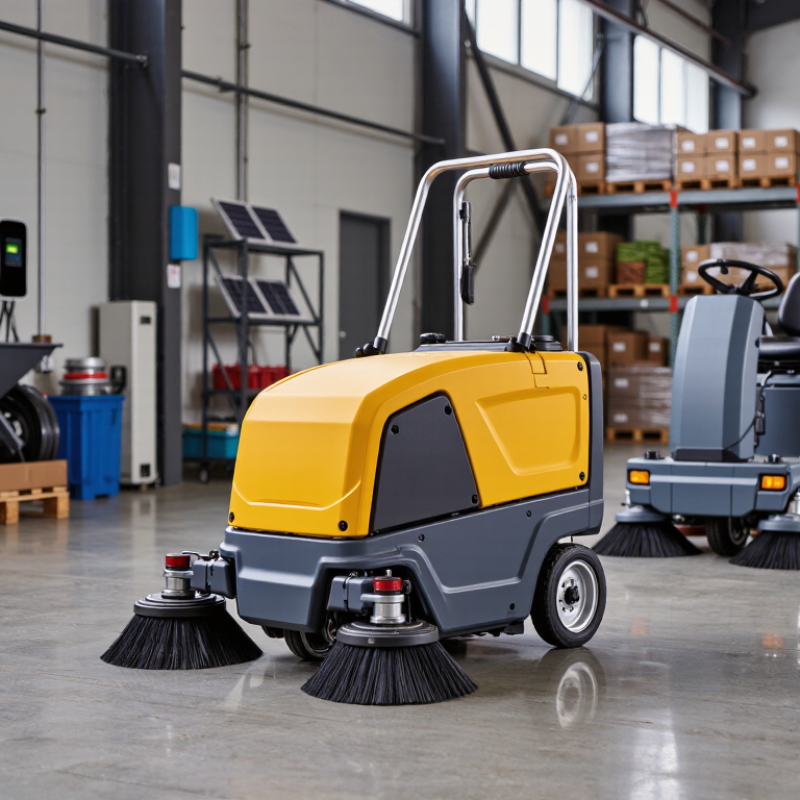
A push sweeper is a manually guided machine for collecting dust, leaves, grit, and light litter. Its wheels drive a cylindrical brush as the operator moves forward. Side brushes pull debris from edges and corners. The main brush then throws material into an onboard hopper.
No battery is required.
This simple mechanism suits warehouses, sidewalks, parking areas, and small industrial yards. Cleaning performance depends on brush pressure, travel speed, debris size, and floor condition. A 60–80 centimetre cleaning path can improve productivity without making steering difficult.
However, wet mud, oily residue, and heavy stones may clog the brush system. Buyers should not treat every push sweeper as a universal solution.
The U.S. Bureau of Labor Statistics reported about 2.4 million janitor and building-cleaner jobs in its 2024–2034 occupational outlook. This workforce scale explains the value of practical, low-maintenance cleaning tools. A suitable sweeper can reduce repeated bending and shorten routine sweeping time.
Yet real results require operator training and regular brush inspection. Field checks often find worn bristles before buyers notice lower collection efficiency.
China-based manufacturers serving global buyers should provide cleaning-width data, hopper capacity, wheel dimensions, replacement-part guidance, and tested performance conditions. Marketing claims without test methods deserve caution. The quiet machine may still leave fine dust behind.
Key Features of China’s Top Push Sweeper Manufacturers
China’s leading push sweeper manufacturers focus on practical performance, not decorative features. Their machines often use reinforced steel frames, impact-resistant plastic bins, and corrosion-conscious surface treatments. These materials help sweepers survive warehouses, sidewalks, parking areas, and factory floors. However, material quality can vary between production batches.
Well-designed models use adjustable cylindrical brushes for different floor textures. Side brushes can reach wall edges, corners, and narrow spaces. Large rubber wheels improve movement across uneven concrete. Sealed bearings reduce dust entry and maintenance needs. Some manufacturers also add enclosed dust channels, which help limit airborne particles during dry sweeping. The result is cleaner work with less manual effort.
Experienced manufacturers usually test brush balance, wheel alignment, handle strength, and collection capacity before shipment. They may offer handle height adjustments, replaceable brushes, customized colors, and export-ready packaging. Clear spare-part lists also support long-term use. Buyers should request test records, product dimensions, loading details, and sample units before placing large orders. A lower price may look attractive, but weak bristles or loose handles can create hidden costs. Factory claims still need verification.
How to Compare Chinese Push Sweeper Suppliers
When comparing Chinese push sweeper suppliers, begin with the machine’s working details, not the catalog price. Check sweeping width, hopper capacity, brush material, handle adjustment, and wheel construction. A supplier should provide clear specifications and recent production photos. Ask whether the same model has passed a practical debris test. Leaves, gravel, and fine dust reveal more than polished product images.
Request a sample or a short inspection video before placing a large order. Watch how evenly the side brush collects debris near walls. Check whether the hopper releases smoothly and whether the handle feels stable during repeated pushing. Compare spare brush availability, packaging strength, lead time, and response speed. These small details often affect operating costs. A low quotation may hide thin wheels, weak fasteners, or limited after-sales support. I have learned that attractive pricing is not always economical.
Reliable suppliers should explain material grades, quality checks, and production capacity without vague promises. Review their export experience, inspection records, and ability to meet your required documentation. Independent factory audits can add confidence, although they cannot replace product testing. One overlooked issue is language clarity. If a supplier misunderstands “sweeping width” or “usable capacity,” later disputes become likely. Keep every specification in a written purchase document. Allow room for improvement; even a well-tested sweeper may need brush adjustments for local surfaces.
Quality Standards and Customization Options for Global Buyers
China’s push sweeper manufacturers increasingly serve buyers who demand measurable quality, not only low prices. Grand View Research estimates the global cleaning equipment market will grow at about 6% annually through 2030. That growth raises expectations for durable frames, consistent brush pressure, and reliable parts supply. A professional buyer should request ISO 9001 quality-management evidence, inspection records, and batch-level traceability. Certification helps, but it does not guarantee perfect performance.
Practical testing matters more. A serious supplier should test sweeping efficiency on concrete, tiles, and uneven outdoor surfaces. Buyers can request data for debris pickup, hopper capacity, wheel durability, and noise levels. Small details matter. For example, a 650-millimeter sweeping width may reduce cleaning time, but it can feel difficult in narrow aisles. Customized options may include brush materials, handle height, hopper volume, wheel size, color, packaging, and private labeling. These choices should match the working environment, not simply the sales quotation.
Ergonomics also deserves attention. EU-OSHA reports that musculoskeletal problems affect roughly three out of five European workers. Adjustable handles and balanced weight distribution can reduce strain during repeated use. Some specifications remain easy to overlook. A larger hopper may improve productivity, yet it can make emptying harder for shorter operators. I would ask for sample testing before a large order. Product drawings can look convincing. Real floors often disagree. Suppliers should provide clear tolerance ranges, replacement schedules, and corrective-action records when a batch fails inspection.
China Top Push Sweeper Manufacturers for Global Buyers: Quality Standards and Customization Options
The chart shows the publication year of widely referenced ISO management and audit standards used by global buyers when evaluating manufacturing, environmental, occupational-safety, and supplier-audit systems. These standards support supplier due diligence but do not replace product testing or inspection.
Common customization options for push sweepers include cleaning-path width, brush material and hardness, hopper capacity, handle configuration, wheel type, color, packaging, instruction manuals, labels, and private-label production. Buyers should request technical drawings, material specifications, inspection records, and pre-shipment test results for customized orders.
Importing Push Sweepers from China: A Buyer’s Guide
China Top Push Sweeper Manufacturers for Global Buyers?
Importing push sweepers from China requires more than comparing catalog prices. UNCTAD reports that ships carry over 80% of global merchandise trade by volume. Therefore, freight planning can strongly affect your final landed cost.
Request a complete quotation. It should include the machine, spare brushes, packaging, insurance, and delivery terms. Check brush width, hopper capacity, frame material, wheel durability, and replacement-part availability. A 70-centimeter cleaning path may suit warehouses, while narrower models work better around shelves and doorways.
Ask for test videos on concrete, textured tiles, and outdoor paving. Sweeping performance often changes with dust, gravel, and moisture. I would not trust a single impressive demonstration. Independent inspection is safer, although it adds time and cost. The World Bank’s Logistics Performance Index 2023 highlights reliability, tracking, and customs efficiency as major supply-chain factors. These details matter when importing bulky equipment.
Tips:
Calculate landed cost before negotiating. Compare carton dimensions, gross weight, minimum order quantity, lead time, and spare-part prices. Request a pre-shipment inspection with photos and serial records. Confirm electrical or safety requirements for your destination market through qualified local advisers. Small omissions can become expensive.
A realistic supplier should explain limitations, not promise perfect cleaning everywhere. That honesty is useful. A cheap sweeper may become costly when its brush wears quickly or replacement parts remain unavailable. Keep written specifications, inspection results, and agreed tolerances in one file. It reduces confusion when the shipment arrives differently than expected.