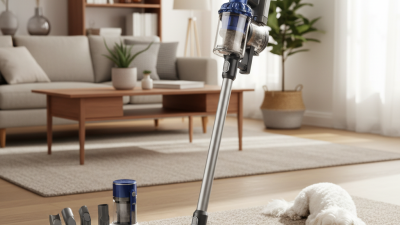
How to Choose the Best Robot Vacuum Cleaner for Your Home?
Choosing the right Robot Vacuum Cleaner can transform your cleaning routine. With numerous options available, it’s crucial to identify what best suits your needs. You may be swayed by flashy features or sleek designs, but practicality should guide your decision.
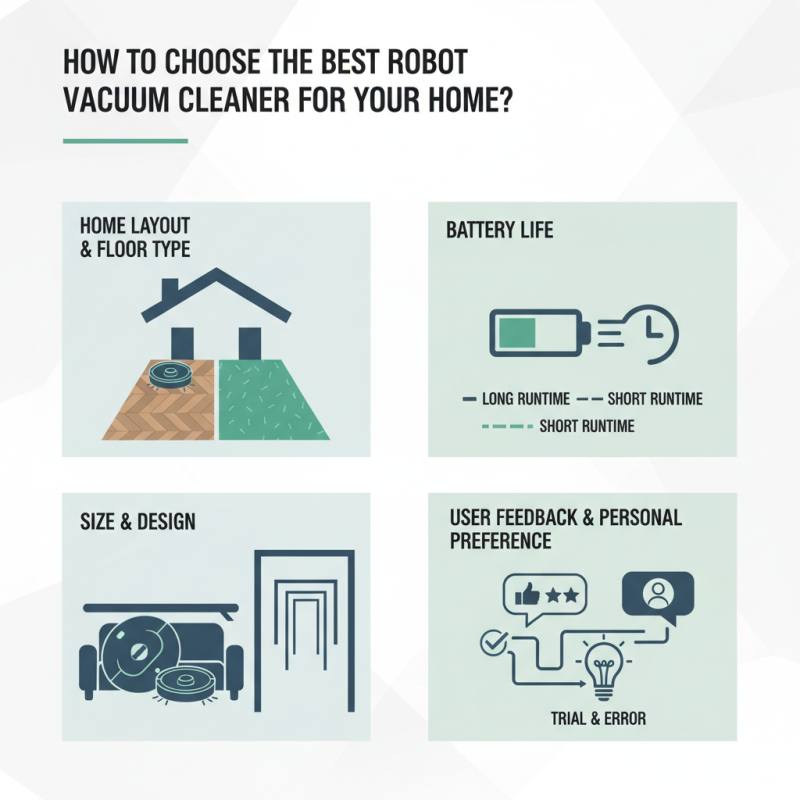
Consider your home’s layout and floor type. Does your space have carpets, hardwood, or a mix? A Robot Vacuum Cleaner designed for multiple surfaces might be ideal. Pay attention to battery life too. A vacuum that runs out quickly may leave some areas untouched.
Don’t overlook size and design. A large model might struggle in tight spaces. Feedback from other users can provide insights, yet personal preferences vary significantly. As you reflect on these elements, remember that finding the perfect fit can be challenging. Embrace the process of trial and error; it often leads to the best results.
Factors to Consider When Choosing a Robot Vacuum Cleaner
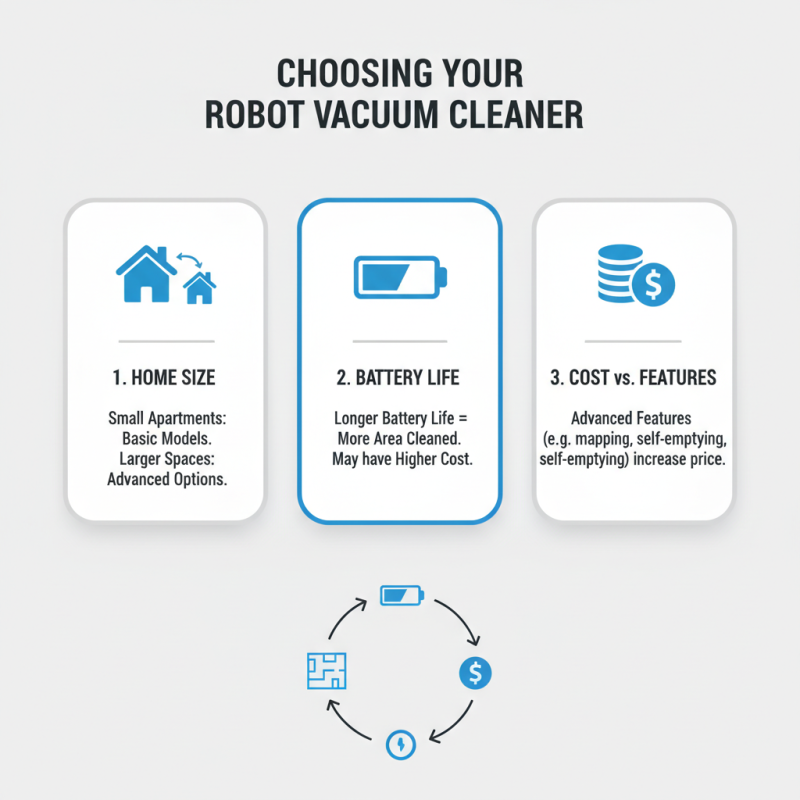
Choosing the right robot vacuum cleaner involves several important factors. Start with the size of your home. Small apartments may benefit from basic models, while larger spaces need more advanced options. Battery life is crucial. A vacuum with longer battery duration cleans more area in one go. Yet, this may come at a higher cost.
Suction power is another element to consider. Models vary in effectiveness on carpets versus hard floors. Ensure the vacuum you choose can handle the flooring in your home. Smart features can enhance usability. Look for connectivity with mobile apps or voice commands. However, some users find these features complex or unnecessary.
Cleaning path patterns matter too. Random movement may leave spots untouched. A systematic cleaning path could be more efficient. Lastly, consider the noise level. Some models can be quite loud, especially on carpets. This could be an issue if you work from home. Choosing the right vacuum often requires some trial and error. Your ideal cleaner might not be the first one you try.
Types of Robot Vacuums: Which One Is Right for Your Home?
When choosing a robot vacuum, it’s essential to consider the different types available. Each type targets various cleaning needs. For instance, automatic robot vacuums are designed for general daily maintenance. They typically suit busy households, as they can clean multiple surfaces on a schedule. According to a recent market report, over 29% of consumers prefer these for their convenience.
On the other hand, some homes need specialized vacuums. Spot-cleaning vacuums focus on specific messes. They are ideal for homes with pets, especially when shedding occurs. Such vacuums often come with powerful suction and robust brushes, making them quite effective. Yet, using them means you may need to do some manual cleaning around large furniture.
Another consideration is the mopping function. Some robot vacuums can vacuum and mop in one go. This dual function can save time and effort, particularly in homes with hard floors. However, they can be a hassle to maintain. Users report that filling and emptying water tanks can become tedious. It’s vital to assess how often you would need this feature before committing. Ultimately, your requirements will guide you in choosing the most suitable type.
Key Features to Look for in a Robot Vacuum Cleaner
When selecting a robot vacuum cleaner, consider essential features that cater to your home’s needs.
Suction power is vital. A model with at least 1500Pa can handle dirt and pet hair effectively.
Performance drops when vacuums are overloaded with debris. Regularly emptying the dustbin can improve efficiency.
Navigation technology is also critical. Many models use basic sensors, while advanced ones employ mapping technology.
According to industry reports, models with mapping can cover larger areas without missing spots. Yet, even advanced models can
struggle in complex room layouts. Observing how the vacuum navigates can provide insights into its capabilities.
Battery life varies significantly. Some models last up to 120 minutes, while others may
only run for 60 minutes. If your home has large areas, choosing a robot with
longer battery life is beneficial. However, recharging can interrupt cleaning sessions.
Ultimately, understanding your specific needs will guide you to the best choice for your home.
Budget Considerations: Finding the Right Price for Your Needs
When choosing a robot vacuum cleaner, budget is essential. Prices vary widely based on features and brands. It's easy to get overwhelmed. Before browsing, set a realistic budget that reflects your needs.
Tips: Know your cleaning frequency. If you vacuum daily, consider a mid-range model. For occasional clean-ups, an entry-level vacuum may suffice. Don’t overlook basic models. They can still effectively clean small apartments.
Consider additional costs, too. Some models require subscription services for app features. Battery replacements, filters, and maintenance add up over time. Calculate these costs to avoid surprises.
Tips: Research reviews on the models you’re interested in. Look for long-term performance insights. Sometimes, a cheaper model has hidden drawbacks, like weaker suction or shorter battery life. Weigh the pros and cons carefully.
How to Choose the Best Robot Vacuum Cleaner for Your Home? - Budget Considerations: Finding the Right Price for Your Needs
| Model |
Price ($) |
Battery Life (mins) |
Suction Power (Pa) |
Navigation Type |
| Model A |
200 |
90 |
1500 |
Smart Navigation |
| Model B |
300 |
120 |
2000 |
Lidar Navigation |
| Model C |
150 |
60 |
1200 |
Gyro Navigation |
| Model D |
400 |
150 |
2500 |
Visual Navigation |
| Model E |
250 |
100 |
1800 |
Random Navigation |
Maintenance and Support: Ensuring Longevity of Your Robot Vacuum
Maintaining a robot vacuum cleaner is crucial for its longevity. Regular cleaning of the brushes and filters is essential. Dust and pet hair can accumulate quickly, affecting performance. Once a week, take out the components and remove any tangled hair or debris. This simple act can significantly improve suction power.
Battery care is another key factor. Many users overlook it and face short runtimes. Ideally, allow the battery to fully charge before using the vacuum. Letting the battery drain too often may shorten its lifespan. Occasionally, check for any signs of wear or swelling as well.
Software updates may be necessary for optimal performance. Some users neglect this step. Connecting the vacuum to the app ensures it runs smoothly. Regular updates can improve features and fix bugs. However, not all robots offer this feature. Research is needed to ensure you choose a vacuum that supports easy updates.